
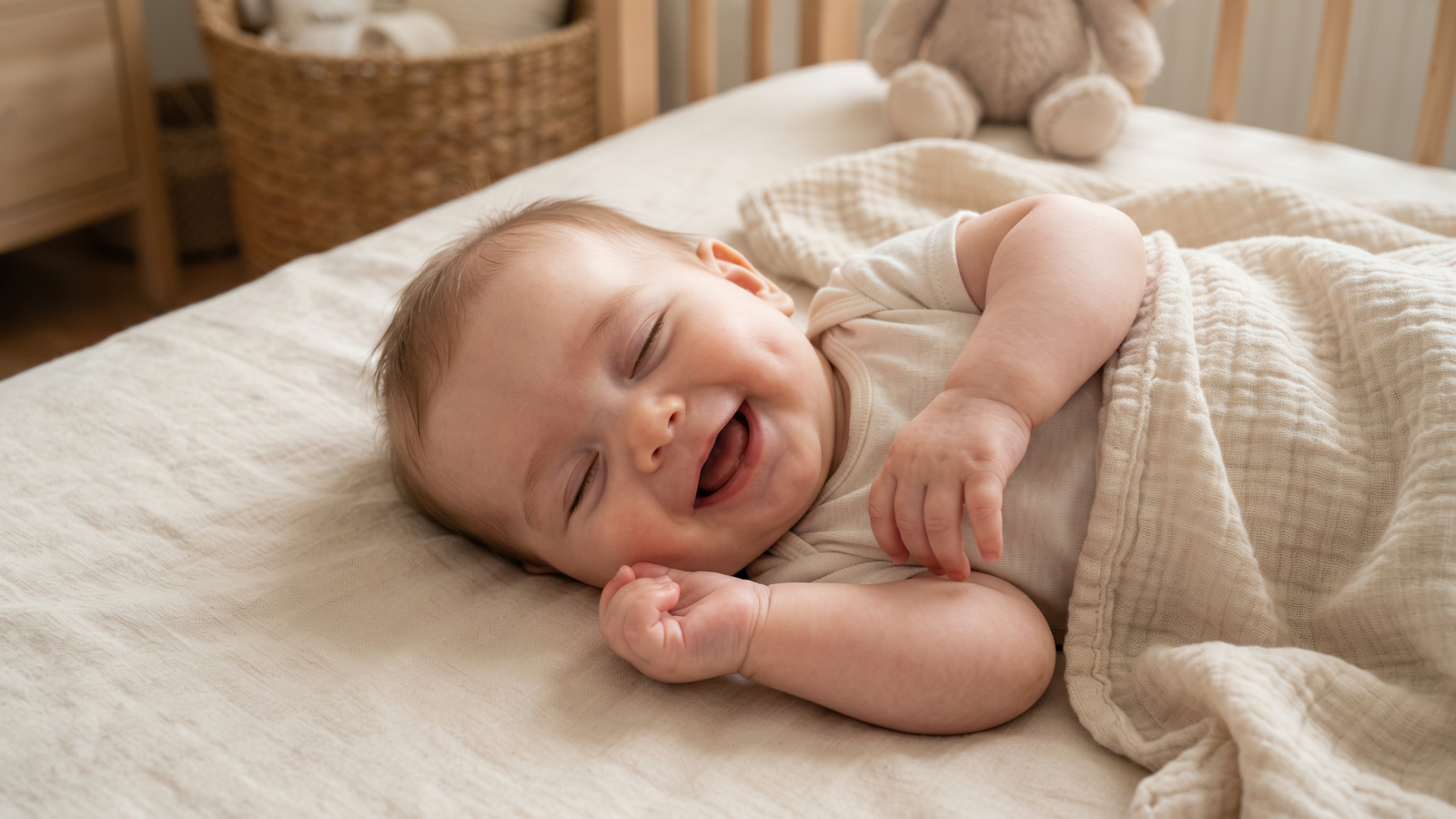
One of the most delightful moments for parents is witnessing their baby laughing in sleep. This seemingly magical event often sparks curiosity and joy, leaving many to wonder about the reasons behind such adorable nighttime giggles. While it’s a common occurrence, understanding why it happens can be quite intriguing. This blog will delve into the fascinating phenomenon of babies laughing in sleep, exploring the science behind it, its significance, and the different perspectives on what these nocturnal chuckles might mean.
The Science Behind Baby Laughing in Sleep
Sleep Cycles in Babies
To comprehend why babies laugh in their sleep, it’s essential first to understand the sleep cycles of infants. Newborns and young babies have different sleep patterns compared to adults. They spend a significant portion of their sleep in REM (Rapid Eye Movement) sleep, which is a lighter sleep stage associated with dreaming. During REM sleep, the brain is highly active, and this is when most dreaming occurs.
Brain Development
Babies undergo rapid brain development in the first few years of life. This growth is accompanied by increased neural activity during sleep. Laughing in sleep, known as hypnogely, could be a byproduct of this brain activity. As babies process new experiences and information, their brain might trigger responses that manifest as laughter.
Emotional Processing
Sleep is crucial for emotional processing and memory consolidation. During REM sleep, the brain processes emotions and experiences from the day. Babies, though unable to articulate their feelings, may be experiencing emotions that trigger laughter. This laughter can be a way for babies to release pent-up emotions or respond to pleasant stimuli from their dreams.
Theories Behind Baby Laughing in Sleep
Reflexive Actions
One theory suggests that a baby laughing in sleep might be a reflexive action. Babies have immature nervous systems, and their bodies often produce spontaneous movements and sounds during sleep. These reflexive actions might include smiling, laughing, or even crying. While it may seem purposeful, it could simply be an automatic response.
Dreaming
As mentioned earlier, babies spend a significant amount of time in REM sleep, where dreaming occurs. While it’s challenging to determine the exact content of a baby’s dreams, it’s possible that they dream about their daily experiences. Since babies are often surrounded by loving interactions, their dreams might involve pleasant memories, leading to laughter.
Social Mimicry
Babies are keen observers and often mimic the actions and sounds they see and hear during the day. If a baby has experienced laughter and joy in their waking hours, they might imitate these behaviors in their sleep. This mimicry could explain why a babies laughing in sleep is a common occurrence.
Cultural and Psychological Perspectives
Cultural Interpretations
Different cultures have varied interpretations of why babies laugh in their sleep. Some cultures view it as a sign of happiness and well-being, while others may consider it a spiritual or supernatural event. Regardless of the interpretation, the phenomenon of baby laughing in sleep is often cherished and celebrated across cultures.
Parental Reactions
For parents, hearing their babies laughing in sleep can be heartwarming and reassuring. It’s often seen as an indication that the baby is content and experiencing positive emotions. However, it can also lead to curiosity and a desire to understand the underlying reasons, prompting parents to seek more information about this behavior.
The Role of External Stimuli
Environmental Factors
External stimuli can play a role in why babies laugh in their sleep. Sounds, lights, and even temperature can influence a baby’s sleep patterns and behaviors. For example, if a baby hears a familiar and comforting sound while sleeping, it might trigger a smile or laughter.
Parental Influence
The interactions and environment parents create for their babies can also impact their sleep behaviors. Babies who experience a lot of positive interactions and playful activities during the day might be more likely to laugh in their sleep. The presence of a secure and loving environment can contribute to a baby’s overall sense of well-being, which might be reflected in their sleep.
Common Concerns and Misconceptions
Is Baby Laughing in Sleep Normal?
Yes, it is entirely normal for babies to laugh in their sleep. It is usually a sign of healthy brain development and emotional processing.